
Selling an Inherited House in California: The Statewide Rules
Inheriting a house anywhere in California drops you into the same statewide legal machinery: one probate code, one property-tax regime, one set of tax rules. This is the state-level map — what applies whether the house is in Sacramento, Stockton, or San Diego — with pointers to the deeper county-level detail in our Sacramento County inherited-house guide.
General information, not legal or tax advice. Estates turn on specifics; a California probate attorney and a CPA are the right hour of spending before big decisions.
Step 1: The Deed Decides Everything
Before the will, before the family meeting — pull the deed from the county recorder where the property sits. How title was held determines which of California’s lanes you’re in:
| Title situation | What happens | Time to a sale |
|---|---|---|
| Living trust holds title | No probate; successor trustee sells under the trust’s power of sale | Weeks |
| Joint tenancy / community property w/ survivorship | No probate; record an affidavit of death | Weeks |
| Transfer-on-death deed recorded | No probate; affidavit + statutory notices | Weeks–months |
| Primary residence ≤ $750,000, no trust | Streamlined petition (Probate Code §13150) instead of full probate — statewide since April 2025 under AB 2016; 40-day wait, one hearing | ~2–4 months |
| None of the above | Full probate administration | Estate: 9–18 months; the house itself, often much sooner (below) |
Two statewide facts most families don’t know:
- The $750,000 shortcut is new. Until April 2025 the streamlined process capped at $184,500 — useless for California homes. Advice from even a few years ago is now wrong on this point.
- A trust only helps if the deed was actually transferred. A beautifully drafted trust that never took title still means probate (sometimes rescuable via a court petition — attorney question).
Step 2: In Full Probate, Authority Beats Patience
If the estate does need formal probate, the number that matters isn’t the case length — it’s what kind of authority the court grants the executor under California’s Independent Administration of Estates Act:
- Full authority (most estates): the executor sells the house without court confirmation — heirs get a 15-day Notice of Proposed Action, and absent objection, escrow closes like any sale. The house can convert to cash months before the estate itself closes.
- Limited authority: sales require court confirmation — published notice, a hearing, open-court overbidding, and a price floor at 90% of the probate referee’s appraisal. Add one to two months and real uncertainty.
The strategic takeaway, statewide: the estate takes as long as it takes, but the house usually doesn’t have to. An early sale stops the carrying costs — insurance (restricted on vacant homes), utilities, maintenance, and property taxes that may be quietly resetting upward, which brings us to:
Step 3: The Two Tax Rules That Set Your Timeline
Stepped-up basis (the good one). Your cost basis resets to the home’s fair market value at the date of death — decades of appreciation vanish for capital-gains purposes. Sell near that value and the taxable gain is minimal; hold a rising asset for years and the post-death gain is taxed (federal capital-gains rates plus California ordinary rates). Get a date-of-death appraisal regardless of what the court requires; it anchors everything. And for scale: California has no inheritance or estate tax, and the federal estate tax starts at $15 million per person (2026) — worry about capital gains and property tax instead. Full tax breakdown here.
Prop 19 (the trap). Statewide since 2021: an inherited home keeps its old property-tax base only if it was the parent’s primary residence and a child makes it their own primary residence within one year (capped, claim required). Every other outcome — rental, vacant, vacation use — means reassessment at market value as of the date of death. On long-held California homes this can multiply the annual tax bill, and it accrues retroactively while families deliberate.
Notice the alignment: the step-up rewards selling sooner, and Prop 19 penalizes holding (unless someone’s moving in). For families not planning owner-occupancy, California’s tax code quietly points one direction.
Step 4: Choose the Sale That Fits the House
Statewide, inherited houses split into two familiar profiles:
- Turnkey, strong market, family aligned → list it. Retail buyers pay retail; the estate captures the premium. Nothing here argues otherwise.
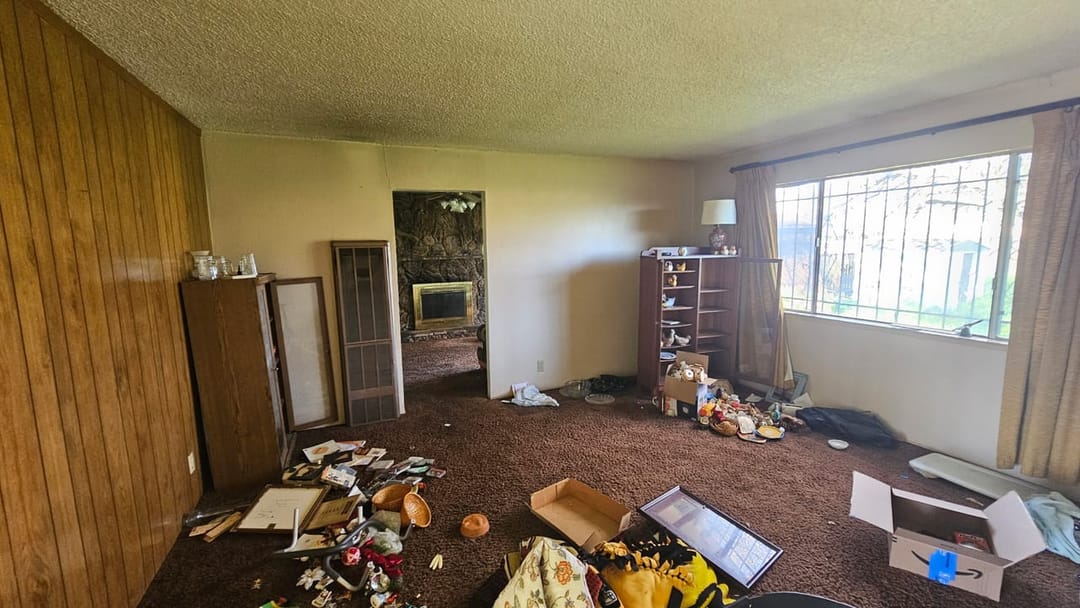
- Dated or full of contents, vacant, family scattered or divided → the carrying-cost math changes. Months of prep, showings, and financed-escrow risk on a vacant house — at post-Prop-19 tax rates — erode the retail premium fast. A direct as-is cash sale trades gross price for speed, certainty, and zero prep; the honest comparison is here. Multi-heir standoffs have their own playbook, including California’s new appraisal-and-buyout partition rights — that guide is here.
Whichever path: the executor should keep an appraisal-anchored paper trail showing the sale price was defensible. It protects them personally, statewide.
Where the Local Layer Matters
Everything above is uniform across California. What varies by county is execution speed and machinery: probate calendars (each superior court’s backlog is its own weather system), assessor processing of Prop 19 claims, recorder procedures, and — practically — the buyer pool for as-is properties. If your inherited house is in the Sacramento region, our county-level guide covers the local courts, timelines, and process in depth: Selling an Inherited House in Sacramento County, CA.
Frequently Asked Questions
Does an inherited California house have to go through probate? Only if no bypass applies — trusts, joint tenancy, TOD deeds, and the $750,000 primary-residence petition all route around full probate.
How long until it can be sold? Trust/joint tenancy: weeks. The §13150 petition: ~2–4 months. Full probate: the estate runs 9–18 months, but a full-authority executor can sell the house far earlier.
What taxes apply? No California inheritance/estate tax. Stepped-up basis usually minimizes capital gains if you sell soon. Prop 19 reassesses property taxes at market value unless a child moves in within a year.
Do the rules differ by county? The law is statewide; the speed is local — court backlogs, assessor processing, and buyer pools vary county to county.
Next Steps
Pull the deed, identify your lane, get the date-of-death appraisal, and make the Prop 19 decision honestly. If the house is in Sacramento, Placer, or Yolo County and selling is the answer, request a free cash offer — as-is, contents welcome, probate-experienced, backed by our $5,000 Close Guarantee.